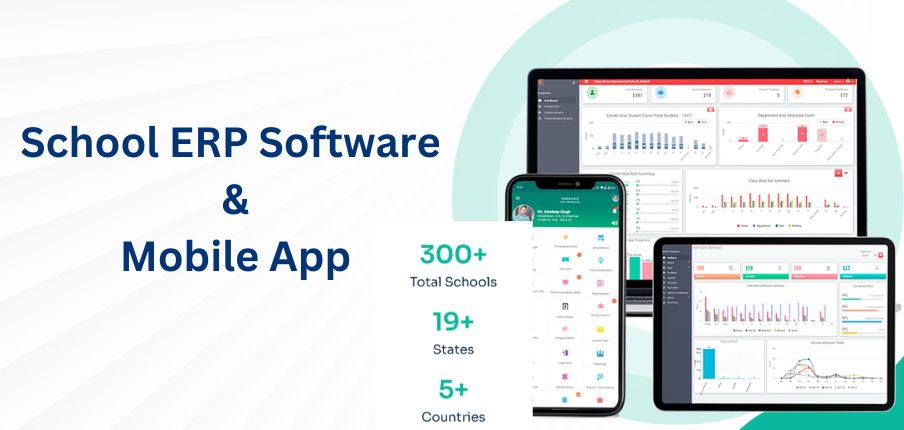
Educational institutions are managing more data, communication, academic activities, and administrative responsibilities than ever before. Cloud based management software gives schools, colleges, and universities a centralized digital environment for managing daily operations without relying on disconnected spreadsheets or manual records.
From admissions and attendance to examinations, fees, communication, staff management, and reporting, modern education technology can bring important processes together. A well-designed platform can also give administrators, teachers, students, and parents access to relevant information based on their roles.
For institutions planning digital transformation, the right software should be secure, scalable, easy to use, mobile-friendly, and aligned with real administrative requirements.
What Is Cloud Based Management Software?
Cloud based management software is a digital platform hosted on cloud infrastructure rather than being dependent on a single local computer or server.
For an educational institution, this can mean authorized users can access important systems through connected devices while the organization manages data through a centralized platform.
Common functions can include:
- Student information management
- Admissions
- Attendance
- Examination management
- Fee management
- Timetables
- Staff management
- Parent communication
- Academic records
- Reports and analytics
- Notifications
- Document management
The exact functionality depends on the platform and the institution’s requirements.
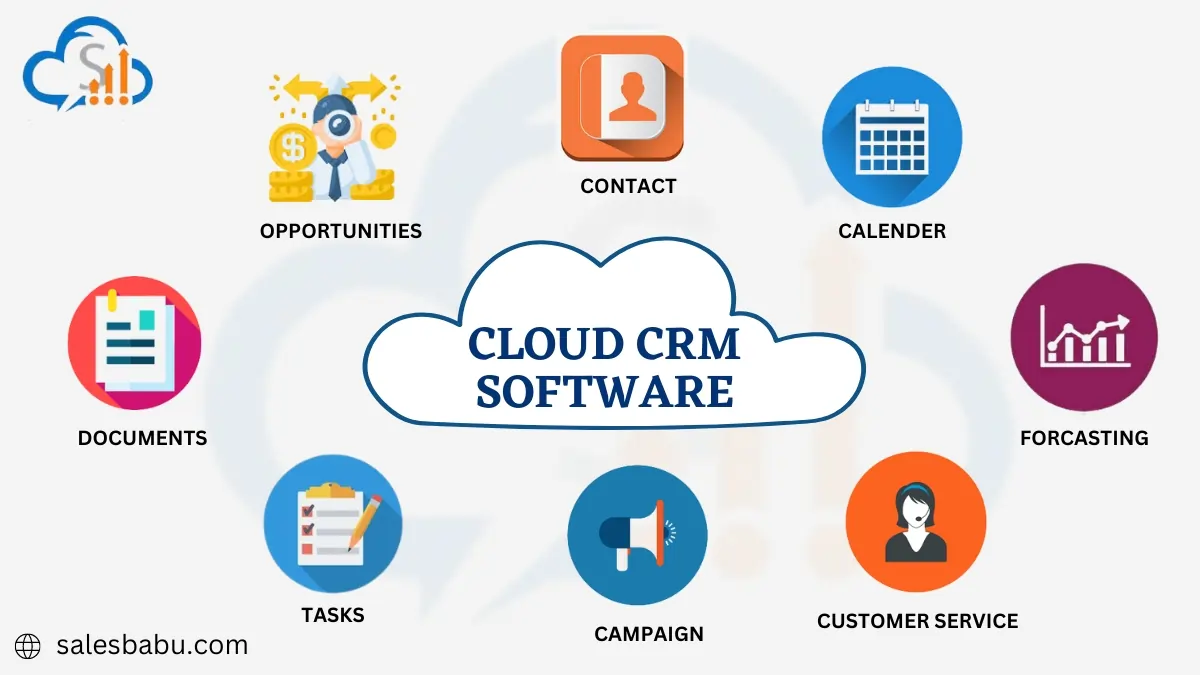
Why Choose a Cloud-Based School Management System in India?
A Cloud-Based School Management System in India can help educational institutions move routine administrative activities into a centralized digital environment.
Instead of maintaining separate records for admissions, attendance, fees, examinations, and communication, schools can bring these functions together.
Centralized Information
A unified database can reduce unnecessary duplication and make it easier for authorized staff to locate relevant student and administrative information.
Remote Accessibility
Cloud-based platforms can support access from different locations, depending on the system’s permissions, connectivity, and security architecture.
This can be useful for administrators and teachers who need to work beyond a single office or campus.
Automated Workflows
Routine processes such as attendance recording, notifications, fee reminders, examination schedules, and reports can be digitized to reduce repetitive administrative work.
Better Communication
Schools can use centralized communication features to share announcements, reminders, academic information, and other updates with the appropriate users.
What Should the Best School ERP in Jaipur Include?
The Best School ERP in Jaipur should not simply offer a long list of features. It should solve the institution’s actual operational challenges.
A comprehensive school ERP may include:
Student Management
Student profiles can bring academic and administrative information into one organized record.
Attendance Management
Teachers and administrators can record and monitor attendance digitally, depending on the system configuration.
Examination Management
Schools can manage examination schedules, marks, grades, report cards, and related academic workflows through a centralized system.
Fee Management
Fee-related features can help institutions organize fee structures, payment records, reminders, receipts, and reports.
Parent and Teacher Communication
Digital communication tools can make it easier to share announcements, academic updates, attendance information, and other relevant notices.
Reporting and Analytics
Management dashboards can help administrators review operational and academic information and identify areas that require attention.
How School Management Software in Jaipur Supports Digital Administration
School Management Software in Jaipur can help institutions replace fragmented administrative processes with connected workflows.
For example, when a student is admitted, the same student record can potentially support multiple functions throughout the academic lifecycle. Instead of repeatedly entering the same information into different systems, connected modules can make information easier to manage.
A school should evaluate whether the platform supports:
- Role-based access
- Data organization
- Reporting
- Notifications
- Mobile accessibility
- Integration capabilities
- Backup processes
- User management
- Scalability
The objective should be to make administration more organized without making the software unnecessarily complicated.
Can University Management Software Handle Larger Institutions?
Yes, university management software can be designed to support more complex organizational structures, although the capabilities depend on the platform.
Universities may need to manage:
- Multiple departments
- Faculties
- Courses
- Student admissions
- Academic records
- Examination processes
- Faculty information
- Fees
- Libraries
- Hostels
- Communication
- Reports
- Institutional analytics
A university platform therefore needs to be flexible enough to accommodate different departments and workflows.
Scalability is particularly important because educational institutions can grow in student numbers, programs, departments, and administrative requirements.
Why College ERP Matters for Higher Education
A College ERP can connect multiple academic and administrative functions through a centralized platform.
For colleges, useful modules may include:
- Student enrollment
- Course management
- Attendance
- Examination management
- Faculty management
- Fee collection
- Academic records
- Communication
- Reports
- Campus administration
A connected ERP can give administrators a more complete view of institutional activities while helping different departments work with consistent information.
What Makes the Best School Management Software in Jaipur Effective?
The Best School Management Software in Jaipur should combine functionality with usability.
A platform can have dozens of features, but if teachers and administrators find it difficult to use, adoption may suffer.
Important considerations include:
Ease of Use
The interface should be understandable for administrators, teachers, staff, and other authorized users.
Security and Access Control
Educational software handles sensitive institutional and student information. Access should therefore be controlled according to user roles and organizational policies.
Scalability
The system should be able to accommodate institutional growth without requiring a complete replacement.
Mobile Accessibility
Mobile-friendly access can make communication and routine tasks more convenient for users.
Integration
Institutions may need to connect their ERP with payment systems, communication platforms, biometric devices, learning systems, or other tools.
Reporting
Useful dashboards and reports can help administrators make decisions based on current institutional information.
How a Software Development Company Can Build Custom Education Solutions
Off-the-shelf education software may work well for many institutions, but some organizations have specialized workflows that require customization.
A software development company can build or customize platforms around specific institutional processes.
Custom development may be useful when an institution needs:
- Unique academic workflows
- Custom dashboards
- Specialized reports
- Third-party integrations
- Custom mobile applications
- Automated approval processes
- Multi-campus functionality
- Custom communication systems
- Specialized data structures
The development process should begin with requirements rather than technology alone.
What Does a Software Developer Do for Education Platforms?
A software developer turns technical and functional requirements into working applications.
For an education management platform, developers may work on:
- Web applications
- Mobile applications
- Databases
- APIs
- User authentication
- Dashboards
- Integrations
- Automated workflows
- Testing
- Performance optimization
- Maintenance
Developers also work with other specialists, such as UI/UX designers, project managers, QA professionals, and technical architects, depending on the project’s size.
Software Development Services in India for Education Technology
Educational institutions looking for software development services in India may choose between ready-made platforms, customized solutions, or completely custom applications.
A development partner can help with:
- Requirement analysis
- Software architecture
- UI/UX design
- Application development
- Database development
- API integration
- Testing
- Deployment
- Maintenance
- Ongoing improvements
This approach can be especially valuable for institutions that need functionality beyond the capabilities of standard school or college software.
How to Choose the Best Software Development Services in India
The Best Software Development Services in India should be evaluated based on technical capability and the provider’s ability to understand the institution’s business requirements.
Before selecting a development partner, consider:
- Relevant development experience
- Technology expertise
- Data security practices
- Communication process
- Project methodology
- Integration capabilities
- Testing standards
- Scalability
- Post-launch support
- Maintenance options
Educational software should be treated as a long-term technology investment rather than a one-time website project.
How Orbit Infotech Can Support Education Software Development
Orbit Infotech can help organizations explore technology solutions for education management, custom applications, cloud platforms, and digital administration.
For a school, college, or university, the development process should begin by identifying the workflows that create the most administrative burden. From there, the software can be structured around actual users and their needs.
A practical education platform should make daily work easier rather than simply digitizing complicated processes.
How Does Cloud Software Improve Educational Administration?
The biggest advantage of cloud-based education software is the ability to connect information and workflows within a centralized digital environment.
Instead of maintaining isolated systems, institutions can create a more connected process for managing students, staff, academics, finance, communication, and reporting.
This can help reduce repetitive work, improve information availability, and create better visibility across departments.
However, institutions should evaluate security, permissions, backups, integrations, usability, and vendor support before selecting a platform.

Frequently Asked Questions
What is cloud based management software for schools?
Cloud based management software is an online platform that helps schools manage administrative and academic activities through centralized digital systems. Depending on the solution, it can cover student records, attendance, examinations, fees, communication, staff management, and reporting.
Is a Cloud-Based School Management System in India suitable for small schools?
Yes. Cloud-based systems can be suitable for institutions of different sizes when the platform is appropriately configured. Smaller schools should prioritize ease of use, essential features, affordability, scalability, and reliable support.
What is the difference between a School ERP and College ERP?
A school ERP generally focuses on school-level workflows such as student management, attendance, examinations, fees, and parent communication. A College ERP may require additional functionality for higher-education courses, departments, faculty, academic programs, and more complex institutional processes.
What should I look for in university management software?
Look for scalability, role-based access, academic and administrative modules, reporting, integrations, mobile accessibility, security controls, and ongoing technical support.
Can a software development company customize an education management system?
Yes. A software development company can customize or develop applications based on specific institutional requirements, including custom workflows, dashboards, integrations, mobile apps, and reporting systems.
Why choose software development services in India?
India has a large technology development ecosystem offering web, mobile, cloud, integration, and custom software development capabilities. Institutions should evaluate providers individually based on technical expertise, relevant experience, security practices, communication, and support.
How can educational institutions prepare for ERP implementation?
Institutions should first document their current workflows, identify key users, define required modules, organize data, establish access policies, and determine integration requirements. A phased implementation can also make adoption easier for staff and administrators.
Also Read: Atlanta Local SEO Services That Boost Store Visits and Calls


Leave a comment